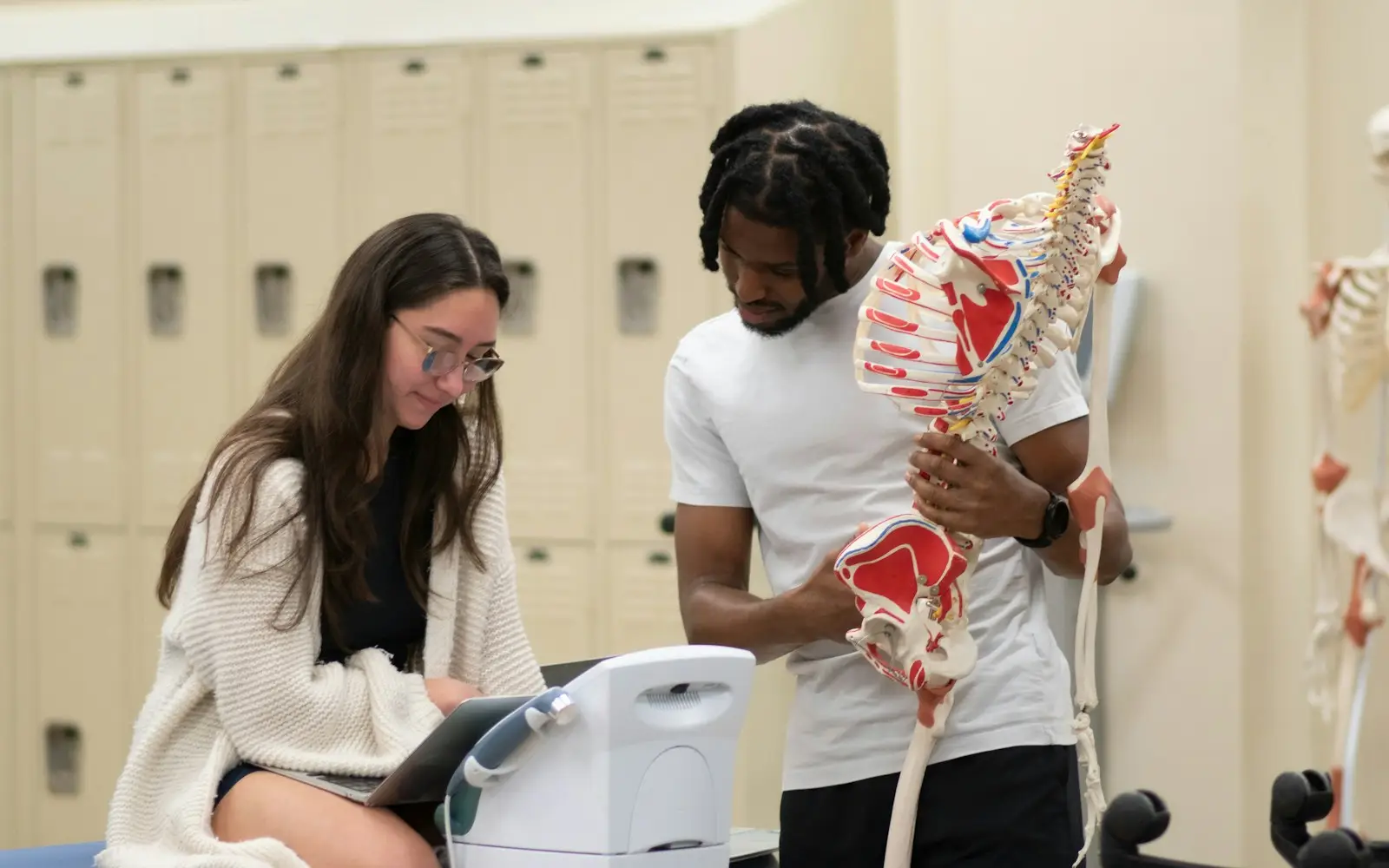
 For students · half day
AI for medical students
For pre-clinical and clinical years, booked by the faculty or a student society for a whole cohort.
How hospitals and medical faculties bring AI into clinical teaching, simulation and assessment — led by emergency physicians who train clinicians.
 Prof. Dato' Dr. Rishya ManikamMedical Lead · AI in Medical TrainingLeads the training
Clinical educators are asked to “use AI” with no guidance on what is validated, what is safe with patient data, or how it fits an existing curriculum and exam standard.
Hospitals, medical and nursing faculties, clinical educators, simulation centres and postgraduate training programmes.
Students need to use AI well. Their teachers need to teach with it and assess it. We run both, and most faculties start with the teachers.
For students · half day
For pre-clinical and clinical years, booked by the faculty or a student society for a whole cohort.
 For educators · 1–2 days
For lecturers, professors, clinical educators, simulation leads and examiners. Our full course, adapted to your curriculum.
We work with institutions, not individual sign-ups: students join through their faculty, student society or hospital, and educators through their department. Individuals can join a public cohort of the educators' course.
Public projects we show in class. Each began as an idea a clinician or developer could describe in a paragraph; AI and AI-assisted coding made it buildable. More in our guide to AI in healthcare.
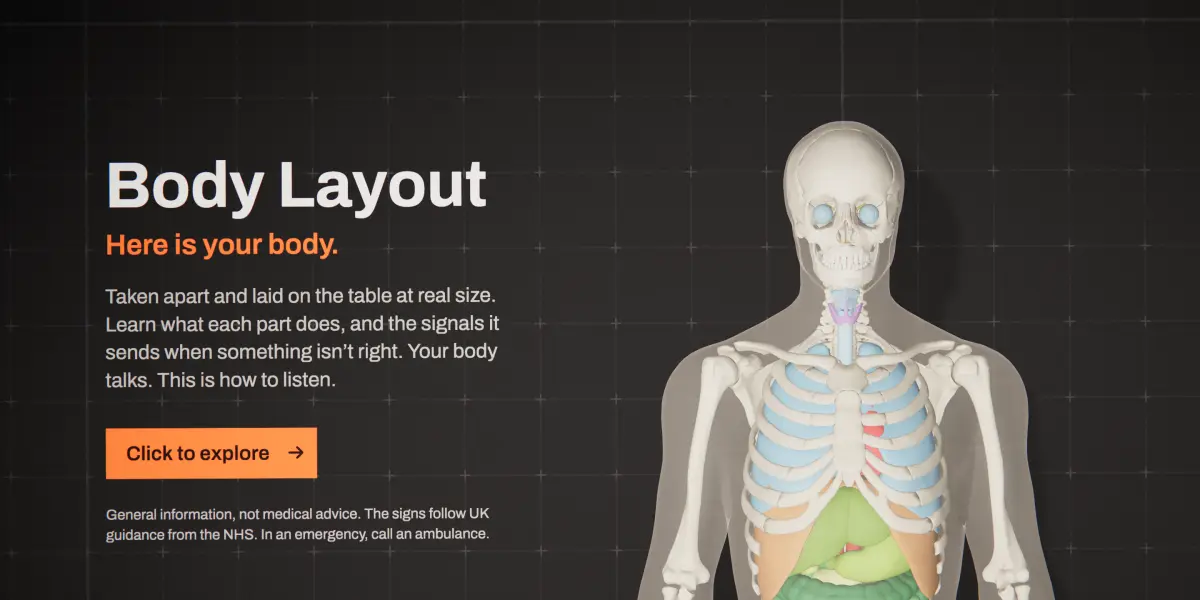
Thirty-four organs laid out at real size in the browser, each with what it does and the warning signs it sends. A solo web project that shows what AI-assisted coding now lets one person build for health education.
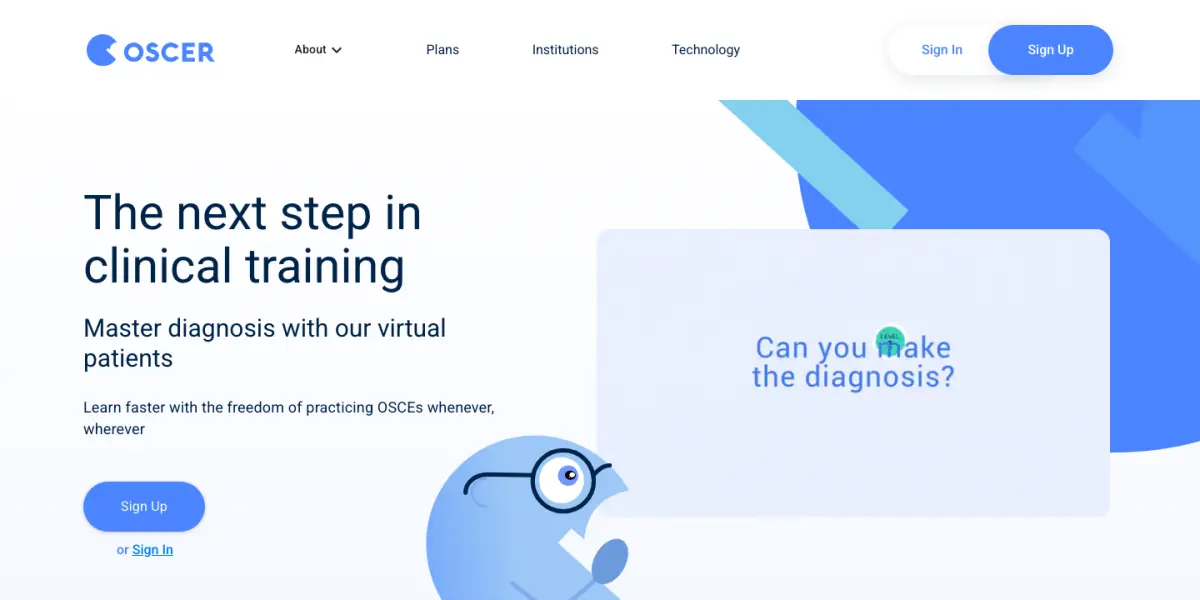
AI virtual patients for practising history-taking and diagnosis before an OSCE. Students talk to a simulated patient and get feedback on their clinical reasoning.
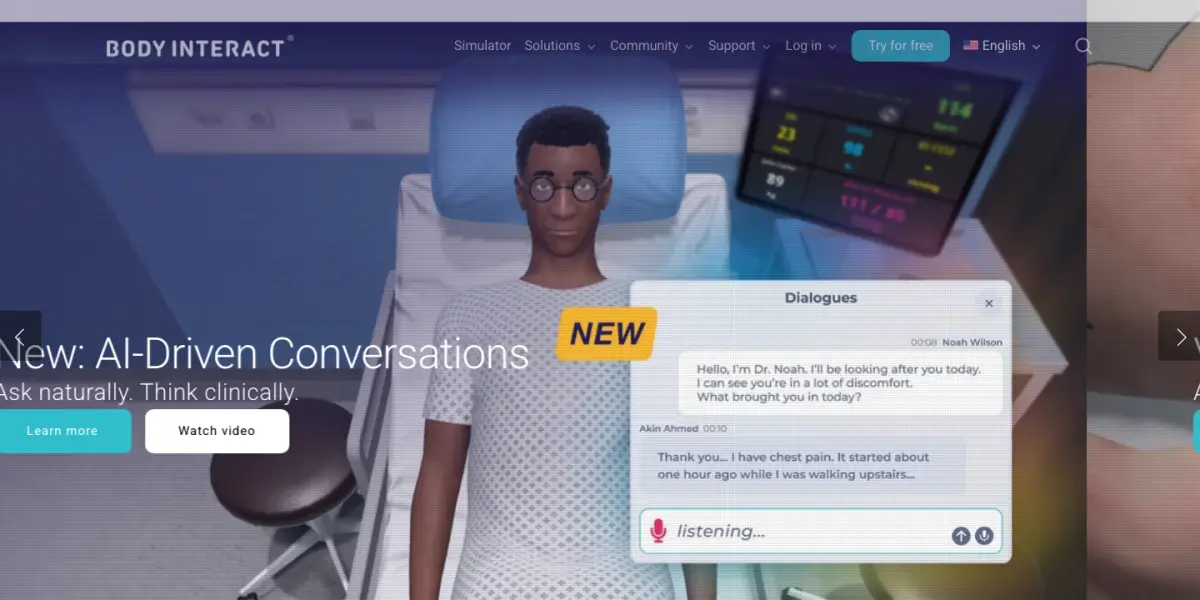
Screen-based patient simulation with AI-driven conversations: the learner asks questions in natural language, orders tests and treats a patient whose condition changes over time.
Cases and simulation scenarios are drafted with AI and validated by clinicians before use.
We work on the accounts your company already uses.
 ChatGPT
 Claude
 Gemini
 Microsoft Copilot
 Perplexity
Hands-on from the first hour. Every module ends with an exercise on participants' own tasks.
What is validated, what is promising and what is marketing — for educators, not vendors.
Using AI to draft clinical cases and simulation scenarios, then validating them clinically.
Exam item development with AI support and mandatory expert review — from a team with exam-board experience.
Lesson preparation, feedback and documentation time saved without cutting corners.
PDPA, consent, de-identification and what never goes into a public model.
Design a scoped, measurable AI teaching pilot for your unit.
Patient messages, letters and a safe 30-day start for a GP clinic: the method of this course applied to your practice.
Each module pairs a technique with the check a clinician performs. The examples are the kind participants work on in class, always with invented or de-identified material.
Example: sort six well-known AI tools into validated, promising and marketing, then defend the sorting to the group.
Example: turn a learning objective on acute coronary syndrome into a case stem, a deteriorating simulation cue and a debrief guide.
Example: draft five single-best-answer questions with AI, then rewrite the distractors after a faculty review.
Example: feedback on a student reflection drafted in minutes, then edited so it sounds like you and says what you mean.
Example: de-identify a real-looking discharge summary and decide which tool, if any, it may go into.
Example: a six-week pilot on one rotation, with one measure such as faculty hours per new simulation case.
Example: a clinic fact sheet that turns forty routine WhatsApp questions a day into checked drafts, with red flags passed to the doctor.
The full programme. The one-day version keeps modules 1, 2, 5 and a short pilot session. Module 7, for GP clinics, runs in the online academy.
| Session | Day 1 | Day 2 |
|---|---|---|
| 09:00–10:30 | Module 1: AI in healthcare — evidence and limits | Module 4: Teaching and documentation workflows |
| 10:45–12:30 | Module 2: Drafting cases with AI | Module 5: Patient data, PDPA and the MMC guideline |
| 13:30–15:00 | Module 2: Simulation scenarios and clinical validation | Module 6: Designing your department pilot |
| 15:15–17:00 | Module 3: Assessment items and OSCE stations with expert review | Pilot presentations and peer review |
The modules stay; the cases, tools and examples change with the group. Tell us who is in the room and we tailor the programme.
Supervising house officers and students with AI in the room, without eroding their skills.
Simulation and assessment for nursing colleges, clinical instructors and ward educators.
Curriculum mapping, exam items and an AI policy for students and staff.
Training departments that run CME, induction and in-service education.
Scenario libraries, debrief guides and virtual patients, with validation built in.
Extra history-taking practice before OSCEs, with faculty-approved cases.
Where AI already works, the showcase and the rules in Malaysia.
And the limits of each.
What is allowed, what is not.
A safe drafting and review workflow.
Our trainers teach from practice. Where a topic needs specialist depth, we bring in experts from our network across Malaysia.
| Delivery | On-site in the Klang Valley, or at your premises anywhere in Malaysia |
|---|---|
| Language | English (Bahasa Malaysia support on request) |
| Class size | Up to 25 participants per class |
| Funding | HRD Corp claimable for registered employers — how it works |
| Included | Course workbook and prompt library; 30 days of access to the winsym student dashboard; Certificate of completion (verifiable online); HRD Corp documentation pack for your claim |
Medical Lead · AI in Medical Training

AI in Medical Training Lead
If yours is not here, ask us directly — we reply within one business day.
No. This course is about integrating AI into medical education — teaching, simulation and assessment. It does not teach clinical procedures and is not medical advice.
Two emergency physicians: Prof. Dato' Dr. Rishya Manikam, Professor of Emergency Medicine at Universiti Malaya and former chairman of the national Emergency Medicine Specialty Conjoint Committee, and Datin Dr. Sri Latha Balakrishnan, Emergency Physician at Hospital Putrajaya with AI in healthcare training from the National University of Singapore.
General tools such as ChatGPT, Claude, Gemini, Microsoft Copilot and NotebookLM, on the accounts your institution approves, plus public examples of virtual patients and AI search. We teach a method that works across tools and do not sell or endorse clinical AI products.
No. If you can write a case for students, you can follow the course. Bring a laptop and an account for the AI tool your institution allows.
No. All cases are invented or fully de-identified. Handling patient data safely is itself a module of the course.
We do not advertise points. If your hospital, university or society hosts the session, it can apply for CPD points for its own event, and we supply the programme, learning outcomes and speaker details.
The course for doctors is about using AI in daily practice. This course is for those who teach: cases, simulation, assessment and the governance of AI in a curriculum. Many hospitals book both.
winsym.ai is an HRD Corp Registered Training Provider. Registered employers apply for the grant under HRD Corp Claimable Courses (HCC) in e-TRiS. For in-house courses the training may start 14 calendar days after approval at the earliest, so plan about three weeks ahead. Approval depends on HRD Corp, your levy balance and the Allowable Cost Matrix. We send the quotation, course outline and trainer profile your HR team needs.
The course is taught in English. Bahasa Malaysia support for discussions and exercises is available on request for in-house classes.

One day for directors and owners to decide what to do with AI this quarter — and what to ignore.
Two days that move every role from “tried ChatGPT once” to a personal AI workflow they use on Monday.
Four to twelve weeks of follow-up so the workflows from class become how your team works.
Share your team size and preferred dates. We reply within one business day with a proposal and the course documents for your HRD Corp application.