Email marketing automation and PDPA consent in Malaysia
Email marketing automation in Malaysia under the PDPA: recorded consent, bilingual notice, unsubscribe handling, overseas email tools and a checklist.
Under Malaysia's PDPA, email marketing automation needs recorded consent before the first promotional email, a privacy notice in Bahasa Malaysia and English, an unsubscribe that works at once and stops every automated flow, and a lawful basis if your email tool stores data outside Malaysia. Build these into the automation itself, not into a policy document. This is general information, not legal advice.
Part of the guide: Marketing automation

On this page
- What does the PDPA say about marketing emails?
- How do you collect consent that holds up?
- What goes into the privacy notice?
- How should unsubscribes work in an automation?
- Is an overseas email platform a problem?
- Which automated flows need extra care?
- What does a compliant setup cost?
- Checklist: email automation under the PDPA
- Sources
- Frequently asked questions
Email marketing automation in Malaysia is legal and useful, as long as four things are built into the system: recorded consent before the first promotional email, a privacy notice in Bahasa Malaysia and English, an unsubscribe that stops every flow at once, and a lawful basis if your email tool keeps data abroad. We show how each one looks inside a real automation below, with a checklist at the end.
Prepared 9 November 2026. Part of our guide to marketing automation in Malaysia. General information under the Personal Data Protection Act 2010, not legal advice.
What does the PDPA say about marketing emails?
The Personal Data Protection Act 2010 (Act 709) applies to personal data processed in commercial transactions, and an email address linked to a person is personal data. Four parts of the Act matter most for email automation:
| Rule | Where it sits | What it means for your emails |
|---|---|---|
| Consent | General principle, section 6 | You need the person's agreement to use their data, including for marketing |
| Recorded consent | Personal Data Protection Regulations 2013, regulation 3 | Consent must be in a form that can be recorded and maintained |
| Notice and choice | Section 7 | Tell people what you collect, why and who receives it, in Bahasa Malaysia and English |
| Direct marketing | Section 43 | A person can tell you in writing at any time to stop using their data for direct marketing |
Section 43 defines direct marketing as communication by any means of advertising or marketing material directed to particular individuals. A newsletter sent to a list counts. So does an automated "we miss you" email with a discount code.
Two points are worth knowing from commentary on the Act. First, if a business ignores a stop request, the person can complain to the Commissioner, who can order the business to stop, and failing to comply with such an order is an offence with a fine of up to RM200,000 or up to two years' imprisonment, or both, as summarised by the law firm Donovan & Ho (article from 2015; check the current penalty in the amended Act). Second, the same source notes that because consent must be recordable, opt-out style consent may not hold up. Our reading for automation: design for a clear opt-in and keep the proof.
Since 1 April 2025, under the Personal Data Protection (Amendment) Act 2024, breaching the data protection principles can be punished with a fine of up to RM1,000,000 or up to three years' imprisonment, or both (previously RM300,000 and two years). We cover the phases in PDPA amendments: what changes for AI use.
How do you collect consent that holds up?
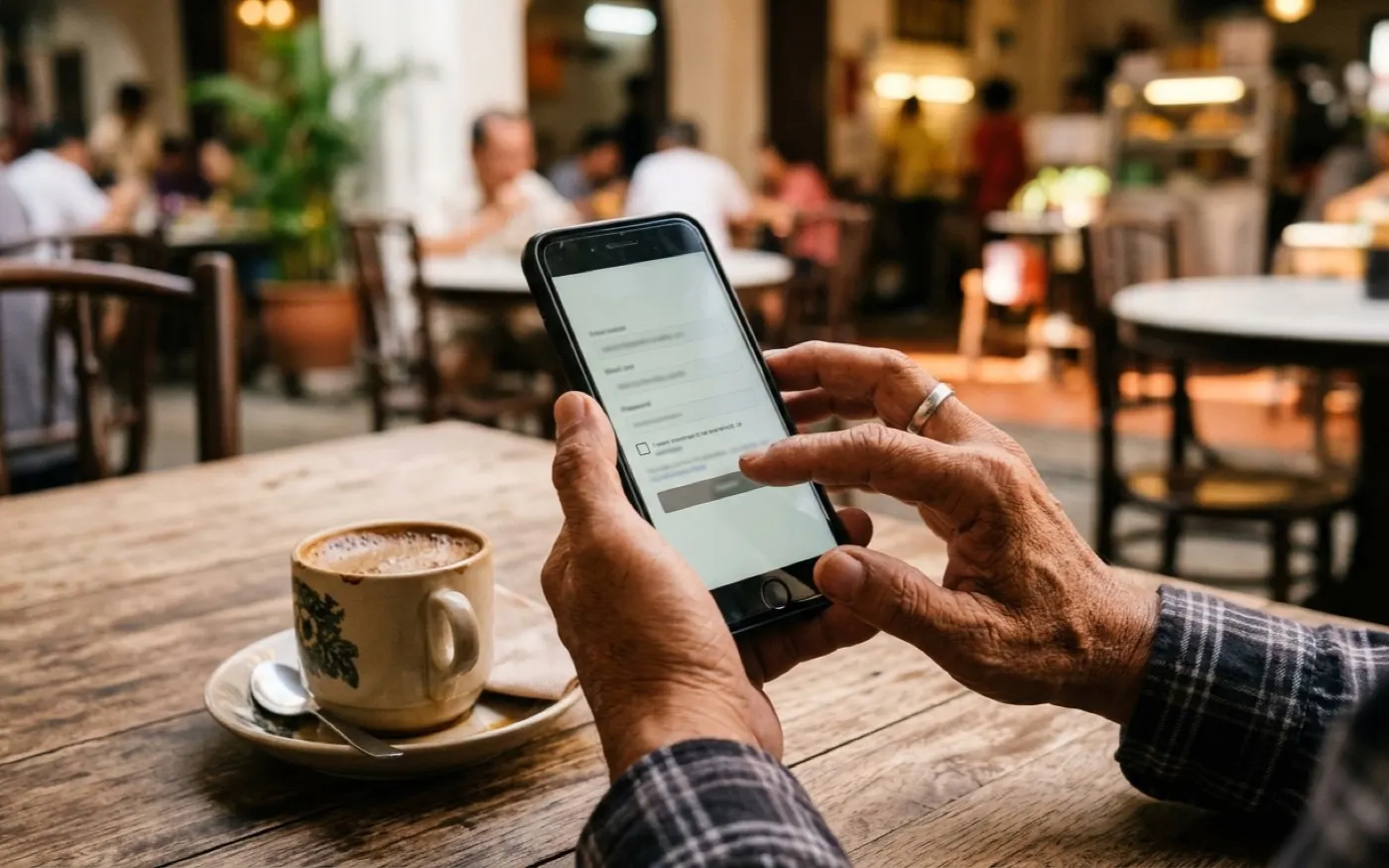
Consent is not a sentence in your privacy policy. It is a record in your system. For each contact, your CRM or email tool should be able to answer: when did this person agree, on which form, to what, and with which notice text.
A sign-up form that holds up has:
- A separate marketing checkbox, not pre-ticked. "Send me practical tips and offers by email, about twice a month." Keep it apart from the box that accepts terms for a quote or a purchase.
- A link to the privacy notice in both languages, next to the checkbox.
- Hidden fields that save the proof: date and time, form name, page URL and the version of the consent text.
- A confirmation email that repeats what they signed up for. Double opt-in, where the person clicks a link to confirm, is not named in the Act, but it gives you the strongest record and keeps typos and fake addresses off your list.
Leads from Facebook lead ads and WhatsApp need the same care. The lead form should carry the marketing question, and the answer should travel into your CRM as a field, not be lost in the hand-over. Our guide to connecting Facebook lead ads to WhatsApp and your CRM shows where that field sits in the flow.
What goes into the privacy notice?
Section 7 asks you to tell people, among other things, that their data is being processed, for what purpose, where you got it, who you may share it with, and how they can contact you or limit the processing. Section 7(3) requires the notice in the national language and English.
For email marketing, make three points easy to find: that you will send marketing emails, which tools process the data (for example your CRM and email platform), and how to stop. One short paragraph in each language is better than a page of legal text nobody reads.

How should unsubscribes work in an automation?
This is where most setups fail. A person clicks "unsubscribe" on the newsletter, but the abandoned-cart flow, the birthday email and the sales rep's sequence keep running, because each lives in a different tool.
The fix is one rule: the opt-out is a field on the contact, and every flow checks it before sending.
- Unsubscribe link in every marketing email, one click, no login.
- A reply such as "stop", "unsubscribe" or "berhenti" is caught and sets the same field.
- The field syncs within minutes to every tool that can send: email platform, CRM sequences, WhatsApp tool. WhatsApp adds its own opt-in rules, covered in WhatsApp marketing automation in Malaysia.
- Keep the address on a suppression list. Deleting it entirely means the next import adds the person back.
- Service emails (invoice, booking confirmation) may continue. Marketing content inside them may not.
We build the sync in n8n or the CRM's own workflows, depending on the stack. Our note on when n8n fits explains the choice.
Is an overseas email platform a problem?
Most email platforms used in Malaysia store data in the United States or Europe. Since 1 April 2025, section 129 of the amended PDPA no longer works with a ministerial whitelist of countries. Instead, a transfer abroad needs one of several conditions, for example the person's consent, a destination with substantially similar protection, or reasonable precautions and due diligence on your part.
Practically: note where each tool stores data, keep the vendor's data processing terms, and mention the overseas transfer in your notice. The wider picture is in our PDPA and AI guide for Malaysian companies. If you process personal data of more than 20,000 people, the Commissioner's data protection officer guideline of 25 February 2025 may require you to appoint a DPO, with lower thresholds for sensitive data: Do you need a DPO in Malaysia?
Which automated flows need extra care?
| Flow | Risk | What to build in |
|---|---|---|
| Welcome series | Starts before consent is confirmed | Trigger only after double opt-in |
| Lead follow-up | Promotional content to someone who only asked a question | Keep the first replies about their question; add offers only with marketing consent |
| Abandoned cart or enquiry | Feels intrusive, often no marketing consent | Limit to one or two reminders, honour opt-out |
| Re-engagement ("we miss you") | Old lists with no consent record | Send only to contacts with a stored consent; otherwise ask once, then delete |
| AI-written emails | Agent sends to the wrong segment | Approval step and a send limit, see our guardrails for marketing agents |
For timing and wording of follow-ups that stay within these limits, use our lead follow-up sequence from day 0 to day 30.
Example: cleaning an old list before the first campaign
Illustrative example, not a client case. A training company in Shah Alam has 4,000 email addresses collected over six years from quotes, events and old spreadsheets. Only about a quarter came through a form with a marketing checkbox. Instead of importing everything, the team imports the contacts with a stored consent as "subscribed", and sends the rest one plain email asking whether they want updates, with a single confirm button. Contacts who do not confirm within 30 days are not mailed again. The list gets smaller, and every address on it has a record behind it.
What does a compliant setup cost?
Most of the work is configuration, not software: consent fields, form changes, the opt-out sync and a tidy import. When we build marketing automation, we start with an AI opportunity audit from MYR 3,500 that maps where contact data comes from and where it goes. A single automation, such as consent capture plus opt-out sync across email, CRM and WhatsApp, falls into our "one automation" range of MYR 12,000 to 25,000. Our breakdown of marketing automation cost in Malaysia shows the other cost blocks.
Checklist: email automation under the PDPA
- Separate, unticked marketing checkbox on every form
- Consent date, source and text version stored on each contact
- Double opt-in confirmation email
- Privacy notice in Bahasa Malaysia and English, linked at the form
- Unsubscribe link in every marketing email
- One opt-out field, checked by every flow, synced to all sending tools
- Suppression list kept after opt-out
- Overseas tools listed, transfer basis under section 129 recorded
- Old contacts without consent asked once, not mailed by default
- One person reviews unsubscribes and complaints weekly
If your team is going to run these flows itself, our AI courses cover safe use of customer data in everyday tools. To have the system built and documented for you:
Sources
- Personal Data Protection Act 2010 (Act 709), sections 6, 7 and 43, and Personal Data Protection (Amendment) Act 2024 (Act A1727), Laws of Malaysia. Sections 7(3) (notice in both languages) and 129 (transfers abroad, in force 1 April 2025). Official information: pdp.gov.my, checked 9 November 2026.
- Personal Data Protection Commissioner, Guideline on the Appointment of Data Protection Officer, 25 February 2025 (as summarised in our DPO explainer).
- Personal Data Protection Regulations 2013, regulation 3 (recorded consent).
- Donovan & Ho, Direct marketing and personal data protection in Malaysia, 28 September 2015.
- winsym.ai prices from our current offer list (audit from MYR 3,500; one automation MYR 12,000 to 25,000), as of November 2026.
Frequently asked questions
Do I need consent to send marketing emails in Malaysia?
In practice, yes. The PDPA's general principle requires consent for processing personal data, and the Personal Data Protection Regulations 2013 require that consent can be recorded and maintained. A pre-ticked box or silence is hard to prove as consent. Collect a clear, separate yes for marketing emails and store when and how it was given.
Can I email people whose business cards I collected at an event?
Only with care. A business card shows contact, not consent to a newsletter. Send one personal follow-up about the conversation you had, ask whether they want your updates, and add them to automated campaigns only after they say yes.
How fast must I act on an unsubscribe?
The PDPA lets a person tell you in writing at any time to stop using their data for direct marketing (section 43). Treat an unsubscribe click or a reply saying stop as that notice and remove the address from every flow immediately, not at the next weekly clean-up.
Is Mailchimp or Brevo allowed under the PDPA?
Using an overseas email platform is possible, but since 1 April 2025 a transfer abroad needs one of the conditions in section 129 of the amended PDPA, for example consent or reasonable precautions and due diligence. Check where the tool stores data and record your basis. General information, not legal advice.